












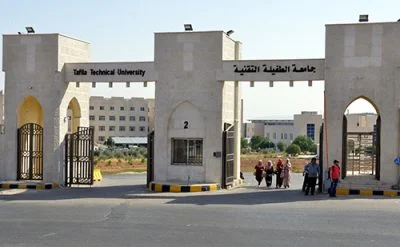
قسم اقتصاد الأعمال
Department of Economics
Teachers Count
15

Department of Economics
Department Overview
The Department of Business Economics is considered one of the core academic pillars established alongside Tafila Technical University in 2005. It initially formed the foundation of the Faculty of Economics and Administrative Sciences and has since evolved into a distinguished academic department offering high-quality programs aligned with the needs of the local and regional labor markets. The Department is supported by a qualified academic staff comprising 13 PhD holders and 2 Master’s degree holders, with diverse academic and professional expertise, contributing to a stimulating and excellence-driven learning environment.
The Department takes pride in being the first and only academic institution in Jordan to offer a Master’s program in Economics and Digital Finance, reinforcing its pioneering role in advancing financial digital transformation and positioning its graduates at the forefront of this vital field.
Vision
To achieve leadership and excellence in education and scientific research in the fields of business economics at the national, regional, and international levels, through a commitment to global quality standards and the promotion of innovation.
Mission
The Department of Business Economics is committed to preparing qualified and specialized human capital capable of competing in labor markets by providing a stimulating educational environment and promoting rigorous scientific research that contributes to addressing economic and societal challenges and supporting sustainable development.
Objectives
• Establish a solid intellectual foundation in economics and finance based on modern scientific theories.
• Develop students’ analytical skills and enable them to utilize modern tools and techniques in analysis, forecasting, and decision-making.
• Integrate theoretical knowledge with practical applications through interactive teaching methods and real-world simulations.
• Enhance students’ competencies in financial technology and digital finance to keep pace with global transformations.
• Support applied scientific research that contributes to community service and addresses economic challenges.
Core Values
The Department of Business Economics is guided in its academic mission by a set of core values, most notably:
Excellence and quality in education and research.
Integrity and commitment to professional ethics.
Innovation and creativity in teaching and learning.
Teamwork and institutional collaboration.
Social responsibility and community engagement.
Lifelong learning and continuous professional development.
Department Majors

1
Credit Hour
Bachelor Degree
Program Overview
The Bachelor of Economics program focuses on the study of how scarce resources are allocated and how individuals, firms, and markets behave under different economic conditions. The program combines theoretical foundations with quantitative and applied approaches to analyze economic phenomena at both the micro and macro levels. It aims to prepare graduates with advanced analytical skills to understand economic challenges, interpret data, and contribute to informed decision-making that supports sustainable development at local, regional, and international levels.
Key Learning Outcomes
By the end of the program, the graduate will be able to:
- Demonstrate a comprehensive understanding of microeconomics and macroeconomics and their applications.
- Analyze economic phenomena and interpret changes in markets.
- Apply quantitative and statistical methods in economic data analysis.
- Understand and evaluate economic policies (monetary and fiscal) and their impacts.
- Analyze markets and interpret consumer and producer behavior.
- Utilize economic models to study and address economic problems.
- Work effectively within multidisciplinary teams and adhere to professional ethics.
- Apply economic knowledge to support decision-making processes.
Brief Study Plan
The study plan includes the following components:
- Basic Requirements: Principles of economics, mathematics, statistics, and computer skills.
- Specialization Requirements: Microeconomics, macroeconomics, econometrics, international economics, and development economics.
- Applied Courses: Economic data analysis, economic policy, financial markets, and econometric modeling.
- Practical Training: Applied exercises and case studies in economic problem analysis.
- Graduation Project: A research or applied study in the field of economics.
Expected Career Fields
- Government ministries and institutions (e.g., Ministry of Finance, Ministry of Planning, Central Bank).
- International organizations and development agencies.
- Banking and financial institutions.
- Economic consulting and financial analysis firms.
- Private sector companies in planning and analysis roles.
- Economic research and think tanks.
- Financial markets and investment companies.
- Academic and training institutions.
1
Credit Hour
Bachelor Degree
Program Overview
The Bachelor of Financial Technology (FinTech) program focuses on the application of modern technologies to enhance and transform financial systems and services through the integration of finance and information technology. The program covers areas such as digital banking, financial data analytics, blockchain technology, artificial intelligence in finance, and electronic payment systems. It aims to prepare graduates with advanced technical and analytical skills to understand, design, and develop innovative digital financial solutions that support the ongoing digital transformation of the global economy.
Key Learning Outcomes
By the end of the program, the graduate will be able to:
- Demonstrate a strong understanding of financial and financial technology concepts and their modern applications.
- Analyze financial data using advanced data analysis tools and techniques.
- Develop and implement digital financial solutions and applications.
- Understand blockchain technology and digital currencies and their applications.
- Apply artificial intelligence in financial analysis and decision-making.
- Design and manage electronic payment systems and digital banking solutions.
- Work effectively in multidisciplinary teams in both technical and financial environments.
- Adhere to professional ethics, cybersecurity standards, and financial regulations.
Brief Study Plan
The study plan includes the following components:
- Basic Requirements: Principles of economics, principles of accounting, mathematics, programming, and statistics.
- Specialization Requirements: Financial technology, financial markets, risk management, financial data analysis, and cybersecurity in financial systems.
- Applied Courses: Financial application development, artificial intelligence in finance, blockchain technology, and electronic payment systems.
- Practical Training: Applied projects and hands-on training in FinTech environments.
- Graduation Project: A research or applied project in the field of financial technology.
Expected Career Fields
- Financial technology (FinTech) companies.
- Banks and traditional and digital financial institutions.
- Electronic payment companies and digital wallets.
- Financial software development companies.
- Data analytics and artificial intelligence firms.
- Investment and digital asset management companies.
- Government institutions and regulatory bodies.
-
Startups in the FinTech sector.
1
Credit Hour
Master Degree
Program Overview
The Master of Finance and Digital Economy program is designed to prepare advanced professionals with in-depth knowledge and analytical skills in modern finance and digital economic systems. The program integrates theoretical foundations with practical applications in financial management, financial technologies (FinTech), digital markets, and economic analysis. It aims to equip graduates with the ability to analyze financial data, understand digital transformation in economic activities, and make strategic decisions that contribute to financial efficiency and economic development in a rapidly evolving digital environment.
Key Learning Outcomes
By the end of the program, the graduate will be able to:
- Demonstrate advanced understanding of financial theories and digital economy concepts and their applications.
- Analyze financial data and economic trends using quantitative and analytical methods.
- Apply financial management tools and techniques in decision-making processes.
- Understand and utilize financial technologies (FinTech) and digital financial systems.
- Evaluate investment opportunities and manage financial risks effectively.
- Analyze digital markets and the impact of technology on economic systems.
- Use modern analytical and data-driven tools in finance and economics.
- Adhere to professional ethics and regulatory standards in financial practices.
Brief Study Plan
The study plan includes the following components:
- Basic Requirements: Advanced statistics, research methodology, econometrics, and data analysis.
- Specialization Requirements: Financial management, digital economy, financial markets, investment analysis, and financial risk management.
- Applied Courses: FinTech applications, digital banking, blockchain and financial technologies, and data analytics in finance.
- Practical Training: Case studies and applied projects in financial and digital economic environments.
- Master’s Thesis / Project: A research or applied study addressing a topic in finance or the digital economy.
Expected Career Fields
- Financial institutions and banking sector.
- FinTech companies and digital financial services.
- Investment firms and asset management companies.
- Government and regulatory bodies in finance and economics.
- Financial analysis and economic research institutions.
- Consulting firms specializing in finance and digital transformation.
- International organizations and economic development agencies.
- Academic and research institutions in finance and economics.
1
Credit Hour
Bachelor Degree
Program Overview
The Finance and Banking program focuses on the study of financial systems and the management of funds within banking and financial institutions, integrating theoretical foundations with practical applications in finance, investment, risk management, and banking services. The program aims to prepare graduates with advanced analytical and professional skills to understand financial markets, evaluate investment opportunities, manage banking operations efficiently, and contribute to financial stability and economic development.
Key Learning Outcomes
By the end of the program, the graduate will be able to:
- Demonstrate a strong understanding of finance, banking, and financial markets and their applications.
- Analyze financial data and interpret financial statements.
- Evaluate investment opportunities and make sound financial decisions.
- Apply financial risk management tools effectively.
- Understand the operations of banks and various banking services.
- Analyze financial markets and securities trends.
- Use quantitative models and tools in financial analysis.
- Adhere to professional ethics and financial regulations and standards.
Brief Study Plan
The study plan includes the following components:
- Basic Requirements: Principles of economics, principles of accounting, mathematics, and statistics.
- Specialization Requirements: Financial management, financial markets, banking, financial analysis, international finance, and portfolio management.
- Applied Courses: Financial statement analysis, risk management, investment and financing, and practical banking applications.
- Practical Training: Field training in banks and financial institutions.
- Graduation Project: A research or applied study in a financial or banking field.
Expected Career Fields
- Commercial and Islamic banks, and central banks.
- Investment companies and asset management firms.
- Insurance and financial services companies.
- Financial brokerage and capital market institutions.
- Private sector financial departments.
- Financial auditing and consulting firms.
- Government financial institutions and regulatory bodies.
- International organizations and development institutions.