











Department of Business Administration
Teachers Count
11

Department of Business Administration
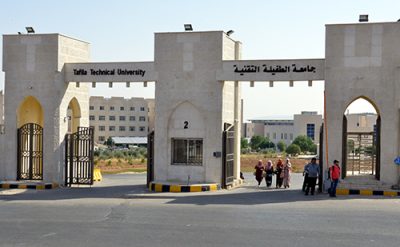
The Department of Business Administration at Tafila Technical University was established at the beginning of the 2005/2006 academic year as one of the core academic departments within the Faculty of Business. Since its inception, the department has been committed to preparing qualified human capital capable of meeting the evolving demands of the labor market.
The department relies on a highly qualified academic staff, comprising faculty members holding doctoral and master’s degrees, ensuring the delivery of high-quality education based on up-to-date and specialized academic curricula. These programs are taught in English and are continuously updated to keep pace with developments in the business environment at the local, regional, and international levels.
The department is dedicated to providing a stimulating learning environment that contributes to developing students’ cognitive and practical skills, thereby enhancing their competitiveness and innovation capabilities. This aligns with the Faculty of Business’s vision of preparing distinguished human capital that contributes to supporting the national economy.
Vision
Leadership and excellence in business education and research, contributing to the development of a knowledge-based and sustainable economy.
Mission
To provide high-quality academic education in the field of business administration, grounded in academic excellence and scientific research, while fostering students’ leadership and innovation skills and strengthening community engagement to serve and contribute to its development.
Objectives
The department seeks to achieve a set of objectives that ensure the preparation of distinguished graduates, including:
- Equipping students with fundamental and advanced knowledge in various fields of business administration.
- Developing analytical and critical thinking skills and decision-making abilities.
- Enhancing the use of modern technologies and information systems in administrative practices.
- Developing leadership, communication, and teamwork skills in multidisciplinary environments.
- Instilling ethical values and social responsibility in professional practices.
- Fostering innovation and entrepreneurial spirit among students.
- Preparing students for the labor market or for postgraduate studies through continuous learning.
- Enhancing understanding of the business environment and contemporary economic challenges.
Values
The department’s academic and educational activities are guided by a set of core values, including:
- Excellence and quality in teaching and learning.
- Integrity and professional ethics.
- Innovation and entrepreneurship.
- Teamwork and collaboration.
- Social responsibility.
-
Continuous learning and self-development.
Department Majors
1
Hour
Master Degree
Program Overview
The Master of Business Administration (MBA) program is designed to prepare advanced managerial professionals with deep knowledge and analytical and leadership skills required to efficiently manage organizations. The program integrates theoretical and applied aspects in areas such as management, marketing, finance, accounting, and human resource management, with a strong focus on analyzing business environments and making strategic decisions. It aims to prepare graduates capable of leading and developing organizations, adapting to changes in local, regional, and global business environments, and contributing to economic development.
Key Learning Outcomes
By the end of the program, the graduate will be able to:
- Demonstrate advanced understanding of strategic management concepts and their applications in business environments.
- Analyze internal and external environments of organizations and make evidence-based decisions.
- Apply financial and managerial analysis tools to support decision-making.
- Develop business strategies and manage organizational change.
- Lead teams and manage human resources effectively.
- Apply concepts of marketing, finance, and operations management in organizations.
- Utilize modern technologies and information systems to enhance organizational performance.
- Adhere to professional ethics and business responsibility in managerial practices.
Brief Study Plan
The study plan includes the following components:
- Basic Requirements: Research methodology, statistics, managerial economics, and information systems.
- Specialization Requirements: Strategic management, financial management, marketing, human resource management, and operations management.
- Applied Courses: Business analysis, project management, organizational leadership, and change management.
- Practical Training: Case studies, applied projects, and business simulations.
- Master’s Thesis / Project: An advanced research study or applied project in the field of business administration.
Expected Career Fields
- Senior and middle management positions in the public sector.
- Executive roles in private companies and organizations.
- Banking and financial institutions.
- Management consulting and auditing firms.
- Project management and development organizations.
- Entrepreneurship and private business ventures.
- International and non-governmental organizations.
- Academic and training institutions.
1
Hour
Intermediate Diploma
Program Overview
The Diploma in Customs and Tax Sciences is designed to prepare qualified professionals with fundamental knowledge and practical skills in customs and taxation systems, through an integration of theoretical foundations and applied practices. The program aims to equip graduates with the ability to understand and apply customs and tax regulations, perform import and export procedures, and comply with relevant laws and regulations. It contributes to supplying the labor market with competent professionals capable of supporting both public and private institutions in customs and tax compliance with efficiency and professionalism.
Key Learning Outcomes
By the end of the program, the graduate will be able to:
- Understand the fundamentals of customs and tax systems and related legislation.
- Apply customs procedures related to import, export, and clearance processes.
- Analyze customs and tax data and use it in decision-making.
- Prepare and audit tax returns in accordance with applicable regulations.
- Use electronic systems and software for customs and tax operations.
- Understand customs and tax audit and assessment mechanisms.
- Adhere to professional ethics and relevant laws and regulations.
- Work effectively within teams in various professional environments.
Brief Study Plan
The study plan includes the following components:
- Basic Requirements: Principles of economics, principles of accounting, and computer skills.
- Specialization Requirements: Customs legislation, tax legislation, customs procedures, tax accounting, control, and auditing.
- Applied Courses: Customs clearance, customs risk management, electronic customs systems, and practical tax applications.
- Practical Training: Field training in customs departments or related institutions.
- Graduation Project / Practical Training: A case study or applied project in the customs or tax field.
Expected Career Fields
- Customs departments and related government agencies.
- Customs brokerage companies and clearance offices.
- Tax and financial departments in the public sector.
- Commercial companies (import and export).
- Tax advisory and auditing firms.
- Banks and financial institutions (compliance and control).
- Free zones, ports, and airports.
- Private sector roles in financial and administrative fields.
1
Hour
Master Degree
Program Overview
The Master of Entrepreneurship and Innovation Management program is designed to prepare advanced professionals capable of creating entrepreneurial ventures and managing innovation within organizations. The program combines theoretical knowledge with practical applications in entrepreneurship, innovation, idea management, and business development. It aims to develop students’ creative and analytical thinking skills, enabling them to transform ideas into successful ventures and contribute to advancing the business environment and fostering a knowledge-based economy.
Key Learning Outcomes
By the end of the program, the graduate will be able to:
- Demonstrate a deep understanding of entrepreneurship and innovation concepts and their applications in business environments.
- Analyze entrepreneurial opportunities and evaluate project feasibility for informed decision-making.
- Design and develop business models and business plans.
- Manage innovation processes within organizations and foster a culture of creativity.
- Apply tools and strategies for managing entrepreneurial projects.
- Analyze markets and customer needs and develop innovative solutions.
- Work effectively in multidisciplinary teams and lead entrepreneurial initiatives.
- Adhere to professional ethics and responsibility in entrepreneurial practices.
Brief Study Plan
The study plan includes the following components:
- Basic Requirements: Research methodology, advanced statistics, data analysis, and fundamentals of management.
- Specialization Requirements: Entrepreneurship, innovation management, entrepreneurial project management, business models, and startup financing.
- Applied Courses: Growth strategies, idea management, entrepreneurial marketing, and digital transformation in business.
- Practical Training: Applied projects and simulations of real entrepreneurial environments.
- Master’s Thesis / Project: A research or applied study addressing an entrepreneurial or innovation-related issue.
Expected Career Fields
- Establishing and managing startups and entrepreneurial ventures.
- Working in business incubators and accelerators.
- Corporate innovation and business development departments.
- Entrepreneurship and business development consulting.
- Government entities supporting entrepreneurship and innovation.
- Investment sector and startup funding organizations.
- International organizations and development initiatives.
- Teaching and training in entrepreneurship and innovation fields.
1
Hour
Bachelor Degree
Program Overview
The Bachelor of Business Administration program is designed to provide students with comprehensive knowledge and practical skills in various business disciplines, including management, marketing, finance, accounting, and human resource management. The program combines theoretical foundations with applied learning to prepare graduates capable of analyzing business environments, making sound managerial decisions, and effectively contributing to organizational success. It aims to equip graduates with leadership, communication, and analytical skills, enabling them to compete in local, regional, and global job markets and support economic development.
Key Learning Outcomes
By the end of the program, the graduate will be able to:
- Demonstrate a solid understanding of core business administration concepts and their applications.
- Analyze business problems and make appropriate decisions based on scientific approaches.
- Apply principles of marketing, finance, accounting, and human resources in organizational settings.
- Utilize modern information systems and technologies in business operations.
- Prepare business plans and manage business activities effectively.
- Work efficiently in multidisciplinary teams and demonstrate leadership skills.
- Communicate effectively in a professional business environment.
- Adhere to professional ethics and social responsibility in business practices.
Brief Study Plan
The study plan includes the following components:
- Basic Requirements: Principles of management, principles of economics, statistics, computer skills, and communication skills.
- Specialization Requirements: Marketing, accounting, financial management, human resource management, organizational behavior, and operations management.
- Applied Courses: Management information systems, project management, entrepreneurship, and business analysis.
- Practical Training: Field training in organizations to apply theoretical knowledge in real-world settings.
- Graduation Project: A research or applied project addressing a business-related issue.
Expected Career Fields
- Public sector and governmental institutions.
- Banking and financial institutions.
- Private sector companies (management, marketing, human resources, finance).
- Insurance and financial services companies.
- Consulting and auditing firms.
- Entrepreneurship and startup ventures.
- International and non-governmental organizations.
- Education and training sector.
 العربية
  English