









قسم العلوم الحياتية
Department of Applied Life Sciences
Teachers Count
7

Department of Applied Life Sciences
The Department of Applied Biological Sciences was established in 2015 at the Faculty of Science, Tafila Technical University. It is considered one of the key academic departments contributing to the preparation of qualified scientific professionals in the field of applied biological sciences, in alignment with the needs of development and labor market demands at both local and regional levels.
The Department adopts an integrated educational approach that combines theoretical foundations with practical applications through modern curricula and well-equipped laboratories. This enables students to acquire the scientific knowledge and practical skills required to work with advanced biotechnological and laboratory techniques. The Department also places strong emphasis on applied scientific research and the development of students’ analytical thinking, problem-solving abilities, and teamwork skills.
The Department offers academic programs at both the Bachelor’s and Diploma levels, carefully designed to keep pace with rapid scientific and technological advancements, and to prepare graduates for effective integration into the labor market or for pursuing postgraduate studies in related fields.
Academic Programs
The Department offers the following programs:
- Bachelor’s Degree in Applied Biological Sciences
The study plan consists of 134 credit hours of theoretical and practical courses, focusing on the study and analysis of biological systems at various levels, from microorganisms to human body systems, using modern laboratory techniques and methodologies. - Diploma Degree in Medical Laboratory Sciences
The study plan consists of 72 credit hours, including specialized theoretical and practical courses aimed at equipping students with the essential knowledge and skills required in medical laboratory practice. The program prepares graduates to work efficiently in medical and diagnostic laboratories while adhering to quality standards and occupational safety requirements, in line with the needs of the healthcare sector and labor market.
Study Plan and Practical Training
The Department places significant emphasis on practical training through advanced teaching laboratories that enhance students’ professional competencies and practical skills. It also aims, as part of its future plans, to develop specialized research laboratories equipped with state-of-the-art technologies to support scientific research and innovation in various fields of applied biological sciences.
Vision
To achieve academic excellence and leadership in applied education and scientific research in the field of applied biological sciences.
Mission
To provide high-quality applied education, support scientific research, and prepare scientifically and professionally qualified graduates within a stimulating academic environment that fosters creativity, innovation, and teamwork.
Objectives
- To prepare graduates equipped with the scientific knowledge and practical skills required for the labor market.
- To continuously develop academic programs and curricula in line with scientific and technological advancements.
- To promote scientific research and innovation among students and faculty members.
- To enhance leadership, teamwork, and entrepreneurial skills among students.
- To strengthen partnerships with local community institutions and the healthcare and industrial sectors.
- To provide scientific consultations and training services to the local community.
Core Values
- Academic quality and excellence.
- Creativity and innovation.
- Integrity and professional ethics.
- Teamwork.
- Social responsibility and a sense of belonging.
Career Opportunities
Graduates of the Department may pursue careers in:
- General education sector.
- Medical and diagnostic laboratories.
- Research and academic laboratories.
- Healthcare and industrial institutions.
- Quality control and regulatory centers.
- Postgraduate studies in related disciplines.
Department Majors
1
Credit Hour
Bachelor Degree
Program Overview
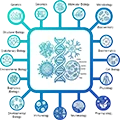
The Applied Life Sciences program focuses on the application of fundamental life science concepts to understand biological systems and utilize them in various fields such as health, the environment, biotechnology, and the food and pharmaceutical industries. The program integrates theoretical knowledge with practical applications, aiming to prepare graduates with the scientific knowledge and laboratory and research skills necessary to keep pace with modern developments and contribute to solving biologically related problems with scientific and applied dimensions.
Program Learning Outcomes
By the end of the program, the graduate will be able to:
Demonstrate a deep understanding of the fundamental concepts of biological sciences and their practical applications.
Analyze biological processes at the cellular and molecular levels.
Use modern laboratory techniques in microbiology and biotechnology.
Design and conduct scientific experiments and analyze and interpret biological data.
Apply biosafety standards and professional ethics in laboratory work.
Employ biotechnological approaches in health, environmental, and industrial fields.
Address biological problems and develop innovative scientific solutions.
Work effectively in multidisciplinary teams and communicate scientific information clearly.
Brief Study Plan
The study plan includes the following components:
Basic requirements: General Biology, General Chemistry, Mathematics, Computer Skills, and Scientific Writing.
Specialization requirements: Cell Biology, Genetics, Microbiology, Biochemistry, Ecology, and Physiology.
Applied courses: Biotechnology, Cell Culture, Molecular Biology, Laboratory Techniques, and Food Analysis.
Practical training: Specialized laboratory courses to apply theoretical knowledge and acquire practical skills.
Graduation project: A research or applied project in one of the fields of applied life sciences.
Expected Career Opportunities
- Medical and diagnostic laboratories.
- Pharmaceutical and food industries.
- Scientific research and development centers.
- Environmental and public health institutions.
- Biotechnology companies.
- Quality control laboratories.
- Education sector (schools and universities).
1
Hour
intermediate diploma
Program Overview
The Applied Medical Laboratory Diploma program is designed to prepare qualified technical personnel capable of performing a wide range of laboratory analyses using modern medical technologies and equipment, thereby supporting the diagnostic process and patient care. The program focuses on the practical and applied aspects of analyzing biological specimens, including blood, urine, and other body fluids, in accordance with the highest standards of quality, accuracy, and biosafety. It aims to prepare skilled laboratory technicians equipped with the scientific knowledge and practical competencies required to work in medical laboratories and healthcare institutions.
Program Learning Outcomes
Upon completion of the diploma program, graduates will be able to:
Demonstrate foundational knowledge in microbiology, biochemistry, and hematology.
Perform a variety of laboratory tests accurately and efficiently.
Operate and maintain modern laboratory equipment.
Collect and handle biological samples in accordance with medical standards.
Apply biosafety and infection control procedures.
Analyze and interpret laboratory results within a clinical context.
Work effectively within healthcare teams and communicate professionally.
Adhere to professional ethics and quality standards in laboratory practice.
Brief Study Plan
The study plan includes the following components:
Basic Requirements: Principles of Biology, Principles of Chemistry, and Computer Skills.
Core Courses: Microbiology, Clinical Chemistry, Hematology, Immunology, and Parasitology.
Applied Courses: Laboratory Techniques, Clinical Testing, Bacterial Culture, and Body Fluid Analysis.
Practical Training: Intensive hands-on training in accredited medical laboratories.
Clinical Practice: Supervised training in hospitals and diagnostic centers.
Expected Career Opportunities
- Hospital medical laboratories.
- Private diagnostic and clinical laboratories.
- Health centers and clinics.
- Medical equipment and supply companies.
- Blood banks.
- Medical research centers.
- Public and private healthcare sectors.