








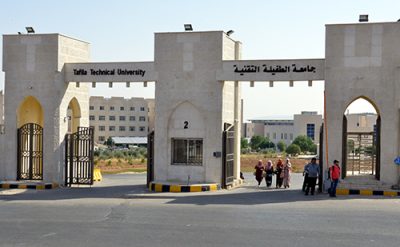

Department of Mechanical Engineering
Teachers Count
18
Mechanical Engineering Department
The Department of Mechanical Engineering at Tafila Technical University is considered one of the vital and continuously evolving engineering disciplines. It plays a fundamental role in supporting the industrial, energy, transportation, and modern technology sectors. The program keeps pace with the rapid global advancements in mechanical engineering sciences through an integrated educational system that combines solid theoretical foundations with practical applications, contributing to the preparation of qualified engineering graduates capable of meeting the needs of both local and regional labor markets.
The department focuses on equipping students with advanced knowledge in the design and analysis of mechanical systems, materials science, manufacturing processes, dynamics and thermodynamics, energy systems, and industrial operations management. It also emphasizes the development of students’ competencies in the use of modern technologies such as computer-aided design and manufacturing (CAD/CAM), engineering simulation, numerical analysis, and applications of artificial intelligence and digital transformation in mechanical systems.
The department offers specialized tracks that respond to industrial and technological developments, including electric and hybrid vehicle engineering, production and machinery engineering, and air-conditioning and refrigeration engineering. These specializations enhance graduates’ readiness for the labor market and align with future industry demands.
A strong emphasis is placed on practical training as a core component of the academic plan, linking theoretical knowledge with real-world application, developing professional skills, and enhancing students’ experience through direct engagement with industrial and engineering environments. This approach prepares graduates who are capable of designing, implementing, operating, and managing mechanical systems efficiently.
Graduates of the department enjoy diverse career opportunities in areas such as industrial design, sustainable energy, modern vehicles, manufacturing, HVAC systems, maintenance, quality assurance, engineering consultancy offices, as well as research and development institutions.
Vision
Leadership and excellence in mechanical engineering education, scientific research, and innovation, with an active contribution to the development of industrial, energy, and technology sectors, in support of sustainable development at both the local and regional levels.
Mission
To prepare qualified mechanical engineers with strong theoretical and practical competencies in design, analysis, and application, capable of employing modern technologies and innovation to solve engineering problems, meet labor market demands, and serve society effectively.
Objectives
- Prepare highly competent graduates in various fields of mechanical engineering.
- Enhance design and analytical skills using modern engineering technologies.
- Integrate theoretical knowledge with practical application through field training.
- Develop students’ capabilities in innovation and engineering problem-solving.
- Support scientific research in energy, manufacturing, and mechanical systems.
- Promote the use of digital technologies and artificial intelligence in engineering applications.
- Meet local and regional labor market needs with qualified professionals.
Values
- Academic and professional excellence
- Engineering creativity and innovation
- Integrity and responsibility
- Teamwork and collaboration
- Quality and continuous improvement
- National belonging and community service
- Sustainability and energy efficiency
Department Majors
1
Credit Hour
Bachelor Degree
Program Overview
The Electric and Hybrid Vehicles Engineering program focuses on the design, development, and analysis of modern vehicle systems powered by electric and hybrid energy technologies. It emphasizes the integration of electric propulsion systems, energy management technologies, battery systems, and intelligent control systems in vehicles. The program aims to prepare qualified engineers capable of keeping pace with the rapid evolution of sustainable transportation and smart automotive technologies.
Key Learning Outcomes
By the end of the program, the graduate will be able to:
- Understand the operating principles of electric and hybrid vehicles and different propulsion systems.
- Design and analyze electric motor systems and power transmission systems.
- Apply energy management and battery technologies in modern vehicles.
- Utilize electronic control systems and artificial intelligence in smart vehicles.
- Diagnose faults and analyze the performance of electric and hybrid vehicle systems.
- Apply safety and efficiency standards in transportation and energy systems.
- Work effectively within engineering teams in the automotive and advanced technology sectors.
Brief Study Plan
The study plan includes the following components:
- Basic Requirements: Mathematics, General Physics, Fundamentals of Electricity, Programming, Computer Skills.
- Major Requirements: Electric vehicle systems, hybrid systems, power electronics, electric machines, energy storage systems (batteries), vehicle dynamics, control systems.
- Applied Courses: Electrical laboratories, control systems, vehicle simulation, applied electronics, energy system analysis.
- Practical Training: Field training in automotive companies, energy sectors, or specialized engineering laboratories.
- Graduation Project: A research or applied project in electric vehicles or smart transportation systems.
Career Opportunities
- Electric and hybrid vehicle manufacturing and development companies.
- Energy systems and battery management sectors.
- Modern vehicle maintenance and diagnostic centers.
- Industrial electronics and control systems companies.
- Smart transportation and autonomous vehicle sector.
- Research and development centers in automotive and energy fields.
- Academic and engineering training institutions.
1
Credit Hour
Bachelor Degree
Program Overview
The Production and Machinery Engineering program focuses on the design, development, operation, and optimization of manufacturing systems and industrial machinery. It covers modern production technologies, automation systems, and advanced manufacturing processes to improve efficiency, quality, and productivity in industrial environments. The program aims to prepare qualified engineers capable of working in manufacturing industries and contributing to industrial development and technological advancement.
Key Learning Outcomes
By the end of the program, the graduate will be able to:
- Understand manufacturing processes and production system fundamentals.
- Design and analyze industrial machines and production systems.
- Apply modern manufacturing technologies and automation systems.
- Improve production efficiency and quality control in industrial environments.
- Use computer-aided design and manufacturing tools (CAD/CAM).
- Diagnose and solve technical problems in machinery and production lines.
- Work effectively within industrial engineering and production teams.
Brief Study Plan
The study plan includes the following components:
- Basic Requirements: Mathematics, General Physics, Engineering Drawing, Programming, Computer Skills.
- Major Requirements: Manufacturing processes, machine design, industrial automation, materials engineering, production systems, quality control, industrial maintenance.
- Applied Courses: Manufacturing laboratories, CAD/CAM applications, robotics, production simulation, applied mechanics.
- Practical Training: Field training in factories, production facilities, or industrial companies.
- Graduation Project: An applied or research project in manufacturing systems, machinery design, or industrial optimization.
Career Opportunities
- Manufacturing and production industries.
- Industrial machinery design and maintenance companies.
- Automation and robotics sectors.
- Quality control and industrial inspection departments.
- Engineering consulting and industrial design offices.
- Maintenance and operations management in factories.
- Research and development centers in industrial engineering.
1
Credit Hour
Bachelor Degree
Program Overview
The Air Conditioning and Refrigeration Engineering program focuses on the design, operation, and maintenance of heating, ventilation, air conditioning (HVAC), and refrigeration systems for industrial and commercial applications. It emphasizes energy efficiency and environmental sustainability. The program aims to prepare qualified engineers capable of developing and managing thermal systems in buildings and industrial facilities to ensure thermal comfort and operational efficiency.
Key Learning Outcomes
By the end of the program, the graduate will be able to:
- Understand the principles of refrigeration, air conditioning, heat transfer, and thermodynamics.
- Design and analyze HVAC and refrigeration systems for buildings and facilities.
- Operate and maintain HVAC and industrial refrigeration systems efficiently.
- Apply energy efficiency and sustainability standards in thermal systems.
- Use engineering design and simulation tools for thermal system analysis.
- Diagnose faults and perform preventive and corrective maintenance of systems.
- Work effectively within engineering teams in HVAC and energy-related projects.
Brief Study Plan
The study plan includes the following components:
- Basic Requirements: Mathematics, General Physics, Thermodynamics, Engineering Drawing, Computer Skills.
- Major Requirements: Heat transfer, air conditioning systems, refrigeration systems, fluid mechanics, HVAC design, industrial refrigeration, energy efficiency.
- Applied Courses: HVAC and refrigeration laboratories, thermal system simulation, applied engineering projects, maintenance of thermal systems.
- Practical Training: Field training in HVAC companies or engineering projects.
- Graduation Project: An applied or research project in air conditioning, refrigeration, or energy efficiency systems.
Career Opportunities
- HVAC and air conditioning companies.
- Industrial and commercial refrigeration sector.
- Energy and energy efficiency companies.
- Engineering maintenance and operations companies.
- Engineering consulting and design offices.
- Smart buildings and thermal control systems sector.
- Research and development centers in thermal systems and sustainability.
 العربية
  English